
Introduction
The pickleball industry has witnessed an unprecedented surge in popularity, transforming from a niche backyard pastime into a global sporting phenomenon. As the sport evolves, so does the equipment, creating a critical decision point for retailers, club owners, and bulk buyers: selecting the right materials for their inventory. The debate often centers on two primary contenders: graphite and composite pickleball paddles. Understanding the nuances between these materials is not merely a matter of preference but a strategic business decision that impacts player satisfaction, return rates, and ultimately, the bottom line.
In the dynamic landscape of sporting goods, the choice of pickleball rackets directly influences gameplay mechanics, including power, control, and ball spin. For B2B buyers and wholesalers, stocking the right mix is essential to cater to diverse skill levels found on a competitive pickleball court. This comprehensive analysis delves into the material science, market trends, and wholesale advantages of graphite and composite paddles, providing the insights necessary to make informed procurement decisions in a rapidly expanding market. Know more..
1. Why Material Science Matters in Pickleball Paddle Selection
The core of any high-performing paddle lies in its construction. While the interior core—usually polymer, Nomex, or aluminum—dictates the “feel” and density, the face material determines how the ball interacts with the surface. For businesses looking to source pickleball paddles for wholesale or custom orders, understanding the distinction between graphite and composite faces is the first step toward optimizing a product catalog.
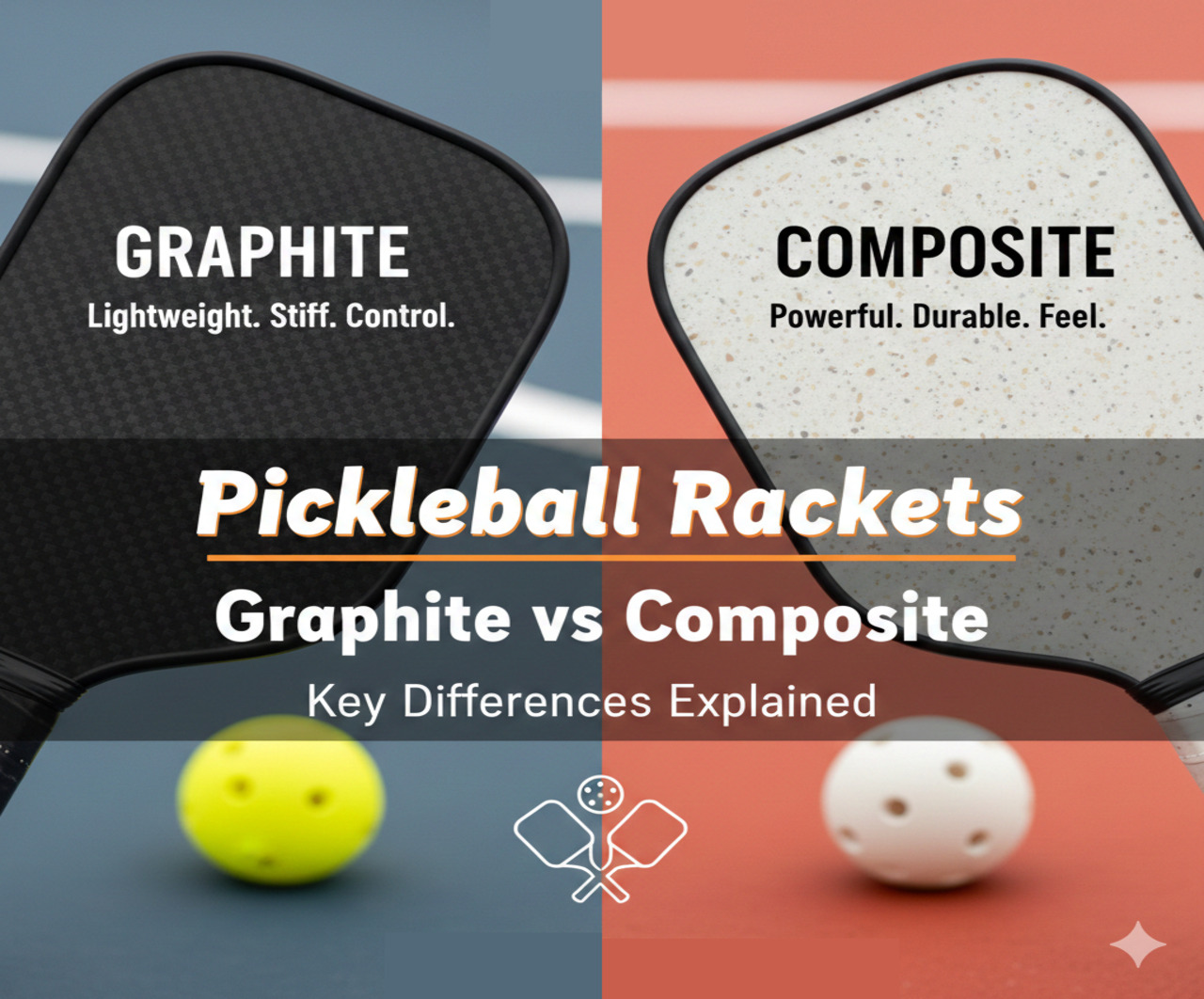
Graphite is essentially a form of carbon arranged in thin, light layers. In the context of pickleball rackets, a graphite face typically consists of a single, thin layer of this carbon fiber. This construction yields a stiff surface with a lightweight profile, allowing for excellent maneuverability and a crisp response upon impact. The stiffness of graphite means that energy loss is minimized during the shot, transferring more power back to the ball with less effort from the player.
Composite surfaces, conversely, are typically constructed using a blend of fiberglass and other composite materials, often reinforced with a polymer resin. These faces are generally thicker and more flexible than their graphite counterparts. The term “composite” covers a broad spectrum, but in the industry, it usually refers to a fiberglass face that offers a distinct texture and flex. The thickness of composite materials can vary significantly, which allows for a larger “sweet spot” and better shock absorption.
For wholesale buyers, the implication is clear: graphite appeals to the performance-oriented segment seeking precision, while composite materials cater to those looking for forgiveness and touch. By comprehending the “why” behind material science, distributors can better anticipate the needs of their specific customer demographics, ensuring that every pickleball court is equipped with gear that matches the players’ intent.
2. How Graphite Pickleball Rackets Enhance Performance
Graphite pickleball rackets have long been the gold standard for advanced players, and for good reason. The performance characteristics of graphite align perfectly with the needs of players who have mastered their technique and require equipment that responds with precision.
2.1. Why Graphite Offers Superior Control and Touch
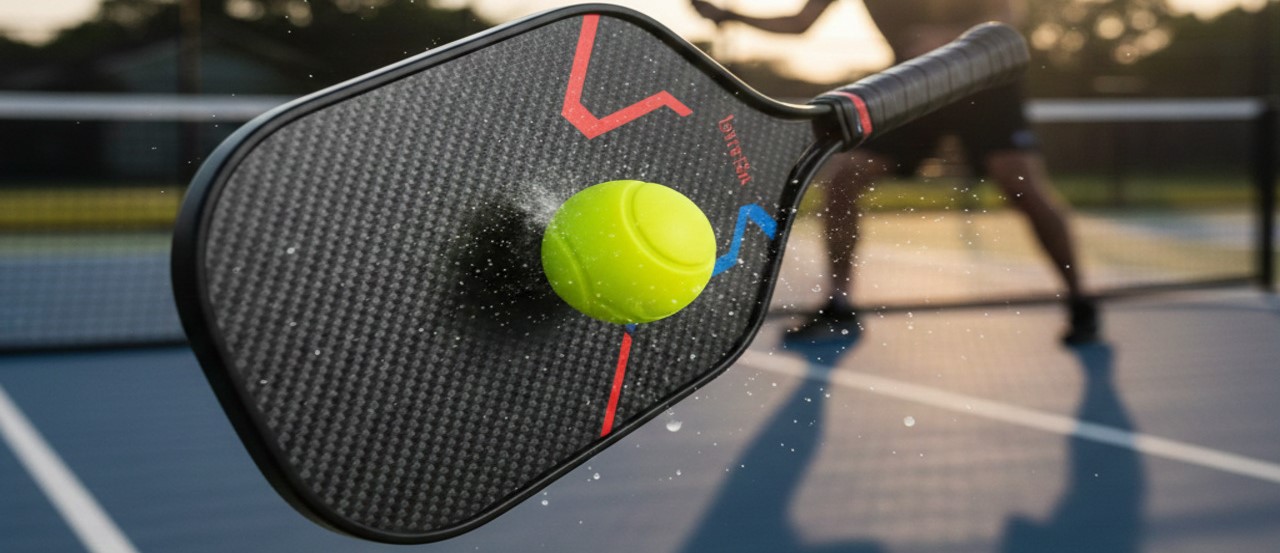
The primary attribute of graphite is its rigidity. When a ball strikes a rigid surface, there is less deformation upon impact. This lack of deformation provides immediate feedback to the player, a sensation often described as a “crisp” feel. For advanced play, particularly at the non-volley zone line or “kitchen,” this feedback is invaluable. It allows players to execute delicate dinks, precise drops, and sharp angles with a high degree of predictability.
In the wholesale market, graphite paddles are often marketed as “premium” or “pro-level” gear. The sleek, smooth finish of graphite also allows for consistent friction, aiding in generating spin. As the game evolves toward a faster, spin-heavy style—evident in the 2025 professional circuits—control becomes the differentiating factor. Retailers stocking graphite options are catering to a sophisticated buyer base that understands the biomechanics of the sport.
Furthermore, the lightweight nature of graphite reduces fatigue during long matches or tournaments. For a B2B buyer targeting senior leagues or competitive clubs, highlighting the ergonomic advantage of lighter graphite pickleball paddles can be a key selling point. It allows for faster reaction times at the net, enabling players to reset powerful drives more effectively.
2.2. How the Lightweight Nature of Graphite Affects Gameplay
Weight distribution is a critical factor in paddle dynamics. Because graphite is inherently strong yet light, manufacturers can mold the paddle to have a balanced or head-light feel without sacrificing structural integrity. A lighter paddle is easier to snap the wrist with, which is essential for generating speed and sudden direction changes.
For custom orders, wholesalers can request specific weight distributions in graphite paddles to target niche markets. For instance, a head-light graphite paddle is ideal for net players who need maneuverability, while a slightly head-heavy balance can provide extra stability for baseline hitters. The versatility of graphite in manufacturing allows for high levels of customization, enabling brands to create bespoke specifications for professional teams or elite training academies.
Market data from early 2025 suggests a trend toward lighter pickleball rackets across all skill levels, as players emulate the playing styles of touring pros. By investing in graphite inventory, wholesalers position themselves at the forefront of this performance-driven trend.
3. Which Composite Pickleball Rackets Offer the Best Value
While graphite often steals the spotlight for performance, composite pickleball paddles hold a massive share of the market due to their versatility and forgiveness. They are often the entry point for beginners and the preferred choice for recreational players, but recent advancements have blurred the lines, making high-end composites viable for intermediate competitors as well.
3.1. Why Composite Materials Provide a Larger Sweet Spot
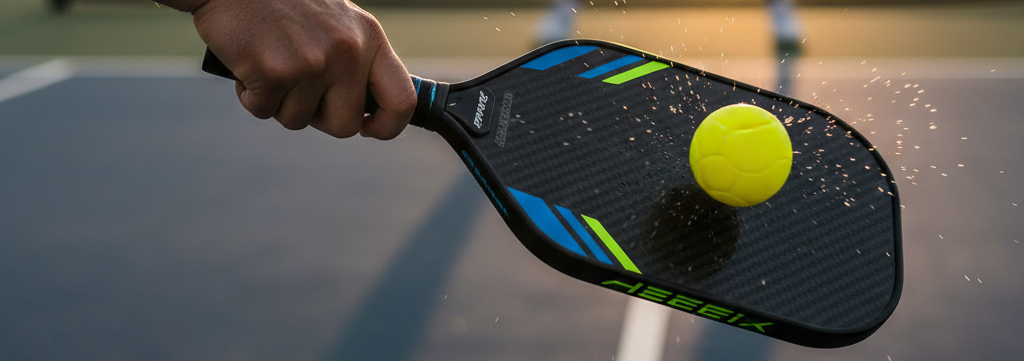
The defining characteristic of a composite paddle is its flexibility and thickness. Unlike the rigid graphite face, a composite face flexes slightly upon impact. This flex acts as a trampoline, helping to propel the ball even when the hit is not perfectly centered. The result is a significantly larger sweet spot.
For beginners and developing players, consistency is the most challenging aspect of the game. Miss-hits are frequent. A composite paddle mitigates the negative effects of these miss-hits, keeping the ball in play longer. This creates a more enjoyable experience for newcomers, increasing the likelihood that they stick with the sport.
From a wholesale perspective, composite pickleball rackets are essential for introductory packages, community center programs, and physical education classes. The durability and forgiveness of these materials reduce customer frustration and decrease the likelihood of returns due to “lack of skill.” By positioning composite paddles as the “confidence builder,” retailers can effectively capture the booming entry-level market.
3.2. How Composite Durability Benefits Wholesale Buyers
Durability is a paramount concern for bulk buyers, particularly for high-volume rentals or institutional sales. Composite materials, specifically fiberglass-reinforced polymers, are incredibly resilient to abrasion and impact. While graphite can chip or crack if struck against a hard surface (like the ground or a net post), composite surfaces tend to be more forgiving of such accidents.
Additionally, the texture applied to composite faces is often integrated into the weave of the material rather than applied as a coating. This means the spin texture lasts longer, maintaining the paddle’s performance characteristics over years of use on a busy pickleball court. For businesses creating rental fleets, the longevity of composite paddles translates to a lower total cost of ownership.
Recent 2026 market insights project a shift in manufacturing toward “textured composites” that mimic the spin potential of graphite while retaining the durability of fiberglass. This innovation makes composite pickleball paddles an increasingly attractive option for bulk buyers looking for a “best of both worlds” inventory item that appeals to a broad skill range.
4. How Market Trends and 2026 Insights Influence Material Choice
The pickleball market is not static; it is driven by innovation and shifting player demographics. Staying ahead of these trends is crucial for wholesalers and custom brand builders who want to maintain a competitive edge.
4.1. Why the 2025 Shift toward Hybrid Paddles Matters
Industry reports from late 2024 and early 2025 indicate a significant rise in the popularity of “hybrid” or ” thermoformed” paddles. These paddles often utilize a carbon fiber (graphite) face that is fused to the core using heat and pressure, creating a unibody construction. While technically distinct from traditional laminated graphite, this trend underscores the market’s hunger for the power and pop that a rigid surface provides.
However, with these technological advancements comes a higher price point. This creates a market gap for affordable, high-quality traditional graphite and composite options. Smart wholesalers are diversifying their portfolios to include both cutting-edge thermoformed pickleball rackets for the tech-savvy pros and reliable traditional options for the recreational majority.
The hybrid trend also emphasizes the importance of customization. Brands can now choose between various face materials, core thicknesses, and edge guard technologies. Offering bespoke solutions allows B2B buyers to differentiate themselves in a crowded marketplace. By 2026, experts predict that customization capabilities will be a primary driver for B2B partnerships, as retailers seek unique product lines that cannot be found on every Amazon shelf.
4.2. How Global Expansion Affects Wholesale Pickleball Demand
Pickleball is currently experiencing explosive growth in international markets, particularly in Europe and Asia. This expansion brings different playing styles and preferences. In some emerging markets, the initial focus is on affordability and durability, favoring composite pickleball paddles. As the skill pool in these regions matures, the demand is expected to shift rapidly toward graphite and performance-oriented equipment.
For wholesale buyers, this means that establishing a supply chain capable of producing both materials is vital. Manufacturers who offer flexible minimum order quantities (MOQs) and easy switching between material types will become preferred partners. Furthermore, the ability to brand these paddles with custom graphics and logos is crucial for capturing regional club markets and corporate sponsorship deals.
Statistics show that the global pickleball equipment market is projected to grow at a CAGR of over 10% through 2026. A significant portion of this growth is driven by the construction of new indoor and outdoor facilities. Every new pickleball court built represents a new demand for equipment. Ensuring that your inventory includes a balanced mix of graphite and composite options ensures that you are ready to supply these burgeoning hubs of activity.
5. Which Customization Options Are Available for Graphite and Composite Paddles
In the B2B sector, the ability to offer a unique product is a powerful value proposition. Both graphite and composite paddles offer extensive opportunities for customization, though the processes and effects differ slightly between the two.
5.1. Why Custom Graphics Resonate on Both Surfaces
For graphite paddles, the smooth surface acts as an excellent canvas for high-definition graphics. The sleek nature of carbon fiber allows for vibrant, sharp images that make logos pop. This makes graphite the ideal choice for corporate gifts, tournament prizes, or pro-level branded gear where aesthetics are as important as performance. The durability of the sublimation process on graphite ensures that the branding remains intact even with rigorous play.
Composite paddles, with their textured surfaces, present a unique set of opportunities and challenges. While the texture can slightly reduce the sharpness of very fine details in a graphic, modern printing technologies have adapted. Full-wrap edge-to-edge printing is now standard on high-quality composites, allowing for bold designs that stand out on the pickleball court. The texture of the paddle itself can actually add a tactile dimension to the branding, creating a premium feel in the hand.
Wholesale buyers should leverage these customization options to create “signature” lines. For example, a resort could commission a batch of durable composite paddles with their logo for guest use, while simultaneously selling premium graphite paddles with the same branding in the pro shop. This tiered approach maximizes revenue per customer.
5.2. How to Leverage Custom Specs for B2B Advantage
Beyond graphics, technical customization is where true value is added for serious players. Weight, grip size, and handle length can all be tailored to specific demographics.
- Weight: Heavier composite paddles (8.0 – 8.5 oz) can be ordered for players seeking power, while lightweight graphite paddles (7.0 – 7.5 oz) can be stocked for control-oriented players.
- Grip Circumference: Offering a range of grip sizes (4″ to 4 ½”) is essential for comfort and injury prevention. Custom orders can focus on specific grip sizes known to sell well in certain regions (e.g., smaller grips for markets with higher female participation).
- Handle Length: Extended handles are becoming a trend for two-handed backhands. Stocking custom graphite paddles with longer handles caters to the tennis crossover demographic, a rapidly growing segment of the pickleball population.
By allowing retailers to specify these parameters, manufacturers empower them to solve specific problems for their customers. Whether it is a club wanting matched equipment for their teaching pros or a corporate buyer looking for specific weight specifications for a wellness program, the ability to customize pickleball rackets closes the sale.
6. How to Optimize Your Inventory for the Pickleball Court
Selecting the right product mix is not just about knowing the materials; it is about knowing the player. A balanced inventory that addresses the needs of different skill levels ensures a steady turnover and high customer satisfaction.
6.1. Why Balancing Power and Control Inventory is Crucial
The golden rule of retailing pickleball paddles is variety. If 100% of your inventory is high-end graphite, you alienate the beginner who is afraid of investing too much before learning the game. Conversely, stocking only cheap composites will frustrate the advanced player who needs the responsiveness of a stiffer face.
A recommended strategy for wholesalers is the “Good, Better, Best” model.
- Good (Entry Level): Durable composite paddles with a large sweet spot. Price-sensitive and high volume. Target: Schools, RV parks, community centers.
- Better (Intermediate): Mid-weight composites or entry-level graphite. Offers a blend of power and control. Target: Leagues, regular recreational players.
- Best (Advanced): High-grade graphite or thermoformed carbon fiber. Maximum control, spin, and responsiveness. Target: Tournament players, professionals, and serious enthusiasts.
This structure ensures that regardless of who walks onto the pickleball court, there is a suitable option available. It also facilitates an upselling conversation; a retailer can start a beginner on a composite paddle and guide them toward a graphite option as their skills improve.
6.2. Which Packaging and Bundling Strategies Increase Sales
Bundling is a highly effective strategy in the pickleball market. Because pickleball rackets are often sold with accessories, creating packages can increase average order value (AOV).
- The Starter Bundle: A composite paddle, two balls, and a drawstring bag. This is perfect for the newcomer who needs everything to get started.
- The Pro Bundle: A custom graphite paddle, a premium duffel bag, three high-performance balls, and a towel. This appeals to the serious player looking for convenience and quality.
- The Court Bundle: Bulk packs of 4 to 8 composite paddles with a heavy-duty carrier bag. Designed for clubs, families, or schools.
For B2B buyers, offering these bundles simplifies the procurement process for the end retailer. It also allows for the movement of higher volumes of inventory. Custom branding on the bags included in these bundles further enhances brand visibility. Every time a player walks onto the pickleball court carrying your branded bag, they become a walking advertisement for your business.
7. Why Choosing the Right Manufacturing Partner Impacts Your Bottom Line
The quality of pickleball paddles is only as good as the factory that produces them. For businesses relying on wholesale and customization, the choice of manufacturing partner is a strategic decision that affects quality control, lead times, and pricing.
7.1. How Quality Assurance Protocols Prevent Returns
Returns are the enemy of profitability in the sporting goods industry. A paddle that delaminates, has a loose edge guard, or a grip that peels after a week creates a negative customer experience. Reputable manufacturers implement rigorous quality assurance (QA) protocols, testing core adhesion, face durability, and weight accuracy before items leave the factory floor.
When sourcing graphite paddles, QA ensures that the carbon fiber weave is consistent and free of defects that could lead to structural failure. For composite paddles, QA focuses on the bond between the fiberglass face and the core, ensuring no dead spots or air bubbles. Partnering with a manufacturer who offers comprehensive warranty support and defect replacement policies is non-negotiable for protecting your brand reputation.
7.2. Why Transparent Sourcing and Ethical Manufacturing Matter
Modern consumers, and by extension B2B buyers, are increasingly conscious of where and how their products are made. Ethical manufacturing practices, safe working conditions, and environmentally responsible materials are becoming selling points. Highlighting that your pickleball rackets are produced in factories that adhere to international labor standards can be a competitive advantage.
Furthermore, transparency regarding material sourcing is vital. Ensure that your supplier uses genuine carbon fiber for graphite paddles and high-grade fiberglass for composites. Substandard materials might save money upfront but will lead to higher return rates and damage to your brand in the long run. As the market matures towards 2026, authenticity and quality assurance will become the primary differentiators for successful wholesale businesses.
Conclusion
The distinction between graphite and composite pickleball paddles is fundamental to understanding the equipment landscape of this rapidly growing sport. Graphite offers the lightweight precision, crisp feel, and control that advanced players demand, making it the cornerstone of high-end inventory. Composite materials provide durability, a generous sweet spot, and power, serving as the perfect entry point for beginners and the workhorse for casual play.
For wholesale buyers and B2B professionals, the objective is not to choose one over the other, but to master the art of offering both. By leveraging market insights, embracing customization, and aligning product offerings with player demographics, businesses can capitalize on the pickleball boom. Whether equipping a local pickleball court, supplying a national retailer, or creating a custom brand, understanding the “why” and “how” of these materials ensures a product line that is both profitable and player-approved.
As we look toward the future of the industry, the trends of 2025 and 2026 point toward a market that values quality, specificity, and brand identity. Now is the time to audit your inventory, engage with reliable manufacturing partners, and prepare to meet the surging demand with equipment that inspires confidence and elevates the game.
Frequently Asked Questions
1. Which type of pickleball racket is better for beginners: graphite or composite?
Composite pickleball paddles are generally superior for beginners. The fiberglass face is more flexible and offers a larger sweet spot, which provides greater forgiveness on miss-hits. This helps new players develop consistency and confidence on the pickleball court without feeling frustrated by the technical demands of a stiffer surface. For wholesale buyers targeting the entry-level market, composites offer the best balance of playability and durability.
2. Why do professional players prefer graphite pickleball paddles?
Professional players prefer graphite because the material provides exceptional stiffness and a lightweight feel. This stiffness ensures that energy is transferred efficiently to the ball, offering precise feedback and superior control. Advanced players rely on this crisp response to execute delicate shots like dinks and drops. Furthermore, the lightweight nature of graphite allows for faster hand speed, which is critical at the high levels of competitive play.
3. How do the prices of graphite and composite pickleball rackets compare for wholesale orders?
Generally, composite pickleball rackets are more affordable to manufacture, making them a cost-effective choice for large volume orders and rental fleets. Graphite paddles, utilizing higher-grade carbon fiber materials, typically command a higher price point due to their performance-oriented construction. However, ordering in bulk allows businesses to negotiate better rates on both materials, enabling a profitable tiered pricing strategy that covers everything from entry-level to pro lines.
4. Which material offers better durability for frequent use on a pickleball court?
While both materials are designed to withstand rigorous play, composite pickleball paddles often hold a slight advantage in raw durability. The fiberglass face is more resistant to chipping and abrasion compared to the thinner, more rigid graphite face. For commercial settings such as community centers, schools, or high-traffic clubs where equipment undergoes heavy daily use, composites often provide a longer lifespan and a lower total cost of ownership.
5. Can I get custom graphics and branding on both graphite and composite pickleball paddles?
Yes, both materials offer excellent opportunities for customization. Graphite’s smooth surface allows for high-definition, sharp printing that makes logos look sleek and premium. Composite paddles, with their textured surfaces, also support full-wrap edge-to-edge printing. Manufacturers can tailor the printing process for either surface, allowing businesses to create unique branded merchandise for tournaments, corporate gifts, or retail lines regardless of the material choice.
6. How does the weight differ between graphite and composite options?
Graphite pickleball rackets are inherently lighter due to the low density of carbon fiber layers, often ranging between 7.0 to 7.8 ounces. Composite paddles tend to be slightly heavier, usually falling between 7.5 and 8.5 ounces. The additional weight in composites can help generate power for players with slower swing speeds, whereas the lighter graphite favors maneuverability and reaction time. Wholesalers can often specify exact weight requirements to fit their target demographic.
7. Why is the “sweet spot” larger on composite pickleball paddles?
The “sweet spot” is larger on composite paddles because the fiberglass face possesses more flexibility and is often thicker than a graphite face. When the ball strikes the paddle, the material flexes to absorb the energy and propel the ball outward, even if the hit is slightly off-center. This trampoline effect effectively expands the area of maximum performance, making the game more forgiving for players who have not yet perfected their ball-strike precision.
8. How should businesses decide which material to stock for their inventory?
A balanced inventory strategy is essential. Businesses should analyze their target market: if catering to recreational players, schools, and newcomers, the bulk of the inventory should be composite pickleball paddles. If serving a competitive club, pro shop, or sophisticated demographic, the focus should shift toward graphite and high-performance options. Most successful retailers utilize a “Good, Better, Best” tier, stocking composites as entry-level and graphite as premium offerings.
9. Are there specific 2026 market trends influencing the choice between graphite and composite?
Yes, industry insights for 2026 suggest a convergence where technology is enhancing both materials. While thermoformed carbon fiber (graphite) is trending for elite players seeking power, innovations in textured composites are closing the gap in spin potential. The market is seeing a rise in “hybrid” constructions that blend properties of both. Wholesalers should stay attuned to these trends, ensuring their product lines include both durable composites for the mass market and advanced graphite solutions for performance seekers.
10. What customization options beyond graphics are available for B2B buyers?
Beyond visual branding, B2B buyers can customize technical specifications to suit specific player needs. This includes adjusting the paddle’s weight distribution (head-light vs. head-heavy), selecting grip circumference (4″ to 4 ½”), and choosing handle length to accommodate two-handed backhands. Manufacturers can also customize the core material (polymer vs. Nomex) within the paddle face. These technical customization options allow businesses to create highly specialized pickleball rackets that stand out in a crowded market.